December 4, 2019
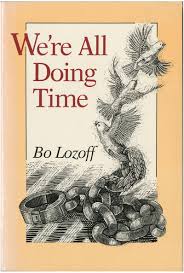
One of the inspirations for my work with prison inmates has been the writings and witness of Bo Lozoff. He, along with Ram Das, created the Prison Ashram Project. The Prison Ashram Project was created to integrate meditation and spiritual techniques into prison. They wanted to reconceive prison as a spiritual community, an ashram. In no way did they glamorize the suffering. They understood the importance of a person applying their time to spirituality, regardless of the circumstances they found themselves. Bo Lozoff’s book is entitled We’re All Doing Time. A person in prison who uses their time to meditate and attain spiritual knowledge and peace is acting like a yogi.
Jesus the Liberator Seminary of Religious Justice has worked to create “seminaries “in prison. A seminary is a school of theology. The inmates are students. The inmates are also the teachers. This is the evolution of “prison theology.” Inmates, like devotees in ashrams, who use their time to resolve past hurts and grow in faith and knowledge, are helping to build communities of faith within captivity. To reconceive places of punishment as a place of trial and growth and to use enforced time as time of study is a way to overcome suffering. This is one of the insights of prisontheology.org.
November 26, 2019
Last week I wrote about individuals and faith communities bearing true not “false witness.” In social ethics, witnesses essentially advocate for “the least of these.” If a society only bears witness to the majority and turns away from the minority, then oppression and inequality will soon follow. Conversely, if a society holds up the minority equally with the majority, then equality and peace will follow. And if, as Jesus seemed to indicate, we hold the minority above the majority, we will have the kingdom of God. The “sermon on the mound” within in the gospels (Matthew 5-7 and Luke 6) conditions blessings upon the “minor key”; those who mourn, are poor, oppressed and falsely accused. In effect, the underside of history and society are the progenitors of blessing and consciousness. Is it any wonder that the great empire of the past accused and killed this migrant, peasant Jesus?
Building a 21st century consciousness upon this insight has led us to prison and to develop in conjunction with the “least of these” a prisontheology.org. Rather than just seeing Christians within the Roman Empire, we see poor people of color within America. These are the Christians in the modern context. And many of these people are seeing Christianity through the lens of non-European Christianity or even through the lens of non-Christian consciousness. Can Christians see others as Christians without the cultural or societal filters?
Christ was arrested (perhaps stopped and frisked), beaten in jail (like documented brutality at the Erie County Holding center and other local facilities) and held without or could not afford bail. He received the death penalty.
November 20, 2019
People of faith are called to bear witness. One of the great commandants from Mount Sinai that Moses gave to the people was to “not bear false witness.” (Exodus 20:16) And so, if a person believes “blessed are the poor” (Luke 6:20) but advocates for the imprisonment of poor people without property like “migrants”, “vagrants” or homeless people, then that is a false witness. And so, a faith community which is called to bear collective witness (which is the necessary witness within democracy and community) but praises the military which creates homelessness and poverty, along with climate change, then it is bearing false witness.
Dietrich Bonheoffer was called to bear witness when he saw poor and powerless people (Jews, “gypsies”, the “handicapped”, workers, homosexuals etc.)rounded up and put cages and camps and killed. His individual witness enlarged a collective witness; a confessing church. A confession is a witness, like Augustine’s Confession as Christian testimony. It is a way to make faith public. The Confessing Church was a public witness against murderous oppression.
In the United States, poor people (including children) are put into prison and their spirit is killed and their community is killed and often times, they are killed either intentionally or not. Some churches have organized into “sanctuary churches” to house poor homeless people and immigrant/migrants. Others, like St. John’s Grace, have hosted poor communities, like 12 step programs or organizations like ours who support and advocate for poor communities. These are examples of collective support networks and public faith statements; bearing witness.
A person in prison bears witness to their faith in the face of violent suppression and resistance. This is a witness to the resiliency and survival of the human/divine spirit. The articulation of it is a form of “Prison Theology.” It is also a form of intelligence.
November 13, 2019
Elijah Green, a former professor, minister and board member of Jesus the Liberator claimed that “Caesar is always on the throne.” Caesar writes the laws. Caesar owns the capital.
“Steal a little and they throw you in jail
Steal a lot and they make you king”
Sweetheart Like You by Bob Dylan
The current president of the United States infamously claimed that he could shoot someone on 5th Avenue and get away with it. Caesar is above the law and many people want to be Caesar. But Jesus claimed that “no one has greater love than this, to lay down one’s life for one’s friends.” (John 15:13) This embeds itself in the highest law “to love your neighbor as yourself.” (Matthew 19:19) And so, according to Christian ethics and laws, sacrificial, universal love is greater than worldly power and the laws of Caesar. But many Christians want it all – the law of Caesar and the law of Christ, the jailer and the healer, and so want to live outside of all law.
“But to live outside the law, you must be honest.”
Absolutely Sweet Marie by Bob Dylan
Prison Theology is grounded in the lived experience of people in captivity. They have been condemned by the laws of Caesar but root themselves in the laws of Christ. They have begun to account for their crimes, both temporal and spiritual. And it is the accounting and atonement process that is revelatory of spiritual/Christian ethics. This insight goes a long way in our understanding of morality and law.
November 8, 2019
Last week in this column I made a distinction between “imperial Christianity” and the origins of Christianity. We know that the Roman Empire persecuted Christians and then absorbed them and made it the official religion of empire and subsequently of Europe and European colonies. The servant became master; Constantine’s paradigm. In other words, the inmate became the warden. The one without worldly power became the power of the world. Jesus bowed down to Satan in the desert temptation. Perhaps this contributed to Prince Myshkin’s breakdown and demise in Dostoevsky’s novel The Idiot.
But things in this world are also more nuanced and subtle and evolve over time. No human or human institution is pure. There is goodness to be found in the church amidst all the inherent contradictions. Within the church is the intention of compassion and community rooted in ritual – very human needs. One way to keep these things authentic is to constantly question and challenge and evolve our consciousness. This is often done in collective action and relationship.
Prison Theology works to support and connect the authentic expressions of Christianity that are found within the people and institutions of the Church and the Prison. Within the massive apparatus of oppression know as prison can be found genuine and powerful expressions and existences of spirituality; chaplains worshiping with and consoling inmates and inmates studying Greek and Hebrew Scriptures in prison cells praying for deliverance. Similar expressions can be found within the massive apparatus of the church. Connecting these communities reveals the universality of the human experience. It also helps to authenticate the mission of the original church. This connection is one of mutuality.
When the state of a relationship is universal and mutual, we evolve and heal. The church can help to reform and/or abolish prisons while reclaiming their calling while simultaneously receiving the wisdom born out of suffering that emanates from prison inmates. Prison inmates can find an outlet for their expression and be healed in validation while being held in the communion of community.
October 30, 2019
The ongoing theme of this column is the explication of Prison Theology. We are “building a bridge of understanding through theological education of prisoners and the community” (From our mission statement). We understand the importance of tapping the untapped potential of the mind of an inmate. We do this by providing support, educational resources and an emotional, intellectual outlet through writing. The power of these writings informs our consciousness and ethic and hopefully, the larger Christian/church world outside of prison. We perceive that Christianity is a criminalized religion in its origins and therefore criminals are potentially the most authentic teachers. This also helps to humble and humanize the imperial nature of the Christianity of empire.
In the culture of the empire, bigger is better. For example, many people believe that the larger the church and the more congregants within, the better. Bigger and better is often equated with righteousness. A mansion is a sign of success while a beggar is a failure. Jesus was a failure yet American Christians worship success. Inmates are failures to societal laws, which are born out of cultural values. How do we equate what was with what is? Can the origins and present incarnations be resolved?
One way resolution can occur is through the process of radical empathy. Jesus implored people to “lose their life for my sake in order to find it” (Matthew 16:25). If the life you are losing is the one that supports Christian empire, climate change and incarceration nation, then you become a criminal. To live outside the law and norms of society, you become a Christian. To become a Christian is to become a criminal. This is why the French philosopher Sartre claimed that the criminal poet Jean Genet was a saint. How can a criminal become a saint?
Not all criminals are saints. However, the basic understanding of harm reduction holds true. If someone harms another, then restoration and healing need to occur. American prisons have long since abandoned restoration and healing. Prison Theology focuses upon the process and capacities of healing through education. This process is one we are facilitating within the captivity of prison. The individual saintly/sinner reality is seen within the context of prison and also separated from that context. “Mercy triumphs over judgment.” (James 2:13)
These are some of the questions we ask. We critique and we serve. We are empathetic and intellectually curious. We restore rather than punish. We hold inmates accountable to their inner spirit. In doing so, we see transformation. The transformation of the incarcerated can help transform the society which incarcerates.
October 9, 2019
part one. Vinoba Bhave was a criminal. He was also the apostolic heir of Mahatma Gandhi’s vision of satyagrahi (individual truth force), a more “pure” form of Gandhi. This “purity” found fruition in, among other places, prison. It was there that he learned language, studied and taught various scriptures of the world. He is an example of universal consciousness in captivity. This is the kind of person and thought we introduce to inmates at Jesus the Liberator.
Why would a Christian organization look into thought streams and spiritualities of other cultures? India, after all, is in Asia and the great cathedrals, literatures and denominations of Christianity are traditionally in Europe. Yes, but Jesus was from Asia. He was a Palestinian in captivity of the Roman (European) Empire. One of our publications, Dreamers, Romans and Prisons: Meditations on Crime, Illness, Healing and Liberation, alludes to the connection, in form and spirit, between Rome and America.
Jesus, Jesus the Liberator and Vinoba Bhave are all in captivity to the dominant prison empire, be it Rome, America or British colonial rule. The individual insights and soul force of inmates, because of their unique position, can help to “undo the heavy burden and let the oppressed go free.”
part two. We have many papers from people in prison. The volume of writing and technical analysis of scripture from some, lead us to say that prison, for a “chosen few”, is a place of study and learning, a seminary, which can instruct the outside world on new insights into ethics and metaphysics. This is not to say that we support prison, it is a place of dread and punishment. But we can connect to the inner light and resilient spirit within some. The words of the resilient advance our consciousness. Advances in consciousness create a society and world more humane, empathetic and sensitive to the soul’s trials and tribulations. A “remnant” is promised for each generation.
The Russian author Dostoevsky claimed that we can know a society by how it treats its prisoners. America’s prisoners, like migrants and immigrants on the border, are caged and abused. The primary Christian ethic of service is to “do for the least of these.”
The German theologian Karl Barth gave sermons in a prison in Basel. Dietrich Bonheoffer, another German theologian, gave his life for the liberation of his people, perishing in a concentration camp. His Letters from Prison survive as does his historical witness.
How will American Christians bear witness in the 21st century?
October 2, 2019
Many people in prison relate to their time there as one of exile. Jeremiah lamenting for a deserted city and the psalmist wistfully recalling an unattainable former happiness hold deep emotional bonds for inmates. African-American blues vibrate deep chords of sorrow for a memory withheld – the loss of an African homeland. African-Americans in prison bear the double lamentation of incarceration. Sorrow upon sorrow is a Good Friday story of the “Cross and the Lynching Tree” (James Cone). The double negative release of lamentations bears a powerful libratory essence of the songs of freedom.
“We’re going to be Iron like a Lion in Zion” Bob Marley
Prison Theology attempts to contextualize and address this sorrow, injustice, joy and liberation. This theology attempts to amplify the personal testimonies of inmates and build upon it with methodologies and pedagogies of liberation.
Thought streams of insight and theory rooted into emotional longing help not only the inmate, but the bondage of a society that sadistically and systematically punishes and incarcerates as a first response.
September 26, 2019
Prison Theology encourages people in prison to, among other things, look at biblical figures that were in prison. The dialectic of power between people and oligarchic structures leads many to prison. Poor Jeremiah, weeping lamentations from a prison cell, Poor Jeremiah with his ladder and bread, will “prison reform” save your people?
The power of psalms to articulate sorrow and joy resonates with many in prison. It allows one to relate to tangible emotions within oneself within the context of prison and allows one to relate to a world outside of captivity.
Paul wrote several letters from a prison cell. Timothy, whom Paul wrote to, must have known Paul and was, therefore, a co-conspirator to Paul’s crimes.
These are a few examples of prison theology. Relating the biblical stories to one’s own life circumstances and making meaning from them is a way of doing prison theology.
Why would the bible include so many examples of prison inmates? Why would a person of faith adhere to the moral authority of the condemned? Why would the Oligarchy ask the state to create prisons at taxpayer expense and then use inmates as a source of labor? Can it be that the jailer is a criminal and that Jeremiah in prison is innocent? These are questions the prison theology looks into.
September 12, 2019
Jesus Christ was a criminal. He was arrested at Gethsemane and spent his last night on earth in the county jail. Christians worship a criminal. The United States incarcerates more people than any nation on earth both in terms of numbers and percentage of the societal population. Americans generally do not worship criminals.
Americans worship mythologized criminals. There is a great amount of literature and movies that portray criminals as folk heroes. Americans love the criminal/outsider while promoting law and order and the rule of law.
Christians love the rule of law. “Yet if it had not been for the law, I would not have known sin.” (Romans 7:7) The law overcomes sin. Christ is the law of love.
The law of love frees the criminal. The law of society condemns the criminal. Who is a criminal?
Crime, law and love are some of the questions we address at Jesus the Liberator, an educational nonprofit which is housed at St. John’s Grace. These questions are being addressed by criminals. Jesus Christ was a criminal. Dr. King was a criminal. The need to say “Black Lives Matter” exists because some people are seen as not quite as law abiding as white America; they are more criminal than white America. Immigrants are seen as criminal. Jesus Christ was a criminal and a refugee seeking asylum.
Socrates was a criminal. The founding pillars of Western culture – Socrates and Jesus – were criminals. Jesus the Liberator works with criminals. Out theological ontology, our ground of being, is rooted in criminals and our context is prison. We are devolving a prison theology. Prison Theology is a way a relating with and encouraging American inmates to articulate a vision of God from within captivity and amplifying their voices through the publication of their works. If you would like to find salvation from sin through the law, then check with the criminal Paul and then come talk to us at Jesus the Liberator.


 Prison Theology